Nurafshan to Establish 'Center for Future Technologies'
Manufacturers of robots, electronics, and equipment will be eligible for benefits
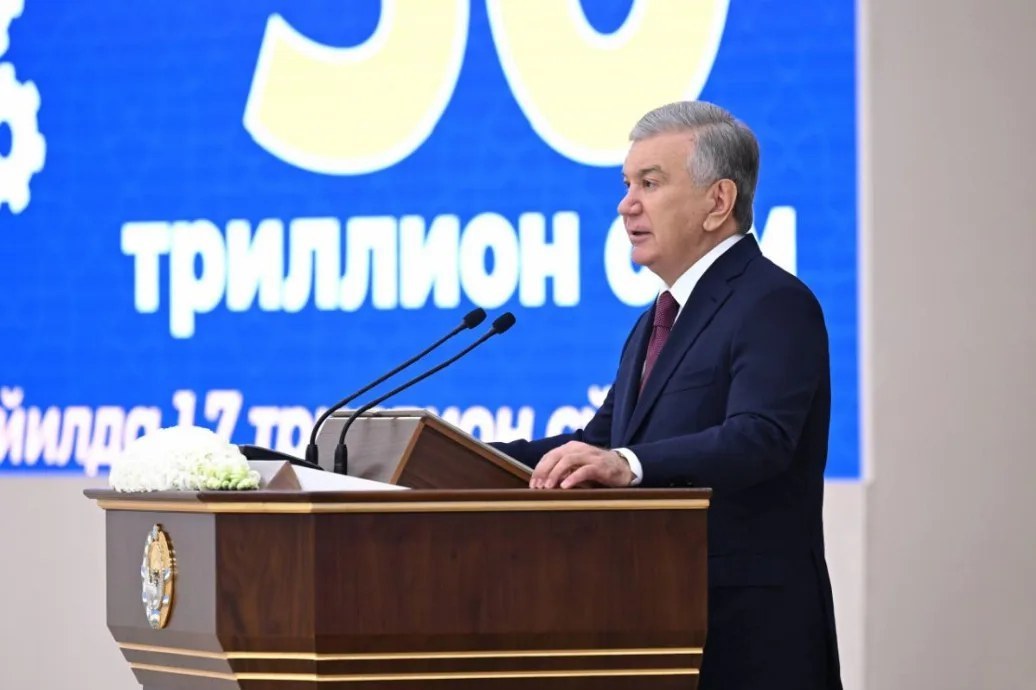
President Shavkat Mirziyoyev held a meeting with representatives of the electrical engineering industry, entrepreneurs, and investors working in this sector.
Over the past ten years, $2 billion has been invested in the industry, and 413 new production facilities have been launched. Companies have started producing over 100 types of products, including household appliances, solar panels, electronic meters, and high-voltage transformers.
This year, the output of the electrical engineering industry reached 50 trillion soums, compared to 1.7 trillion soums in 2016. Investments amounted to $600 million, and exports totaled $1.6 billion. Over the past period, foreign shipments have increased 14-fold.
Mirziyoyev noted that these results still do not match the industry's potential, so its development needs to be accelerated.
Special attention at the meeting was given to copper production—one of the key raw materials for electrical engineering. This year, the third copper enrichment plant was commissioned. After the project's implementation, copper production will be increased to 300,000 tons, and by 2030, the figure is planned to rise to 500,000 tons.
The country is building solar and wind power plants, creating energy storage capacities, and continuing large-scale construction in the regions. Over the next ten years, projects worth $450 billion are planned to be implemented jointly with partners.
According to the president, this will form a long-term market for electrical engineering products. Among the factors for the industry's development, he mentioned copper and critical mineral reserves, young specialists, as well as entrepreneurs and investors ready for cooperation. These opportunities are planned to be combined with new technologies and developments.
Dozens of enterprises already operate in the country, producing equipment for the textile industry, metalworking, construction, and other sectors. In the Akhangaran technopark, microprocessor modules are manufactured, and in Tashkent, a project for robot production was launched jointly with South Korean partners.
Authorities plan to increase the number of such enterprises and create a unified ecosystem. It should provide the economy's sectors with modern equipment, industrial robots, and electronic products.
In Nurafshan, a 'Center for Future Technologies' will be established. Its enterprises will receive benefits at the level of IT Park residents. The import of raw materials and components for the production of robots, electronics, and technological equipment will be exempt from customs duties. Income from scientific developments in these areas will also not be taxed.
To strengthen ties between science and industry, a national platform 'Yanghi Sanoat' (New Industry) will be developed. It should unite researchers working on future technologies with industrial enterprises.
By May 1, each region has been instructed to create one research and development (R&D) center or reorient a technopark toward new industrial directions. Additionally, testing sites for products will be organized in the regions to enhance cooperation between large enterprises and small businesses.
Responsible agencies have also been instructed to prepare a draft resolution on the development of robotics within two weeks. By March 1, a comprehensive program to support the machinery and electronics industries must be developed.