Natural Gas Consumption in Central Asia Rises by 76% Over 10 Years
Meanwhile, exports over the same period have nearly halved
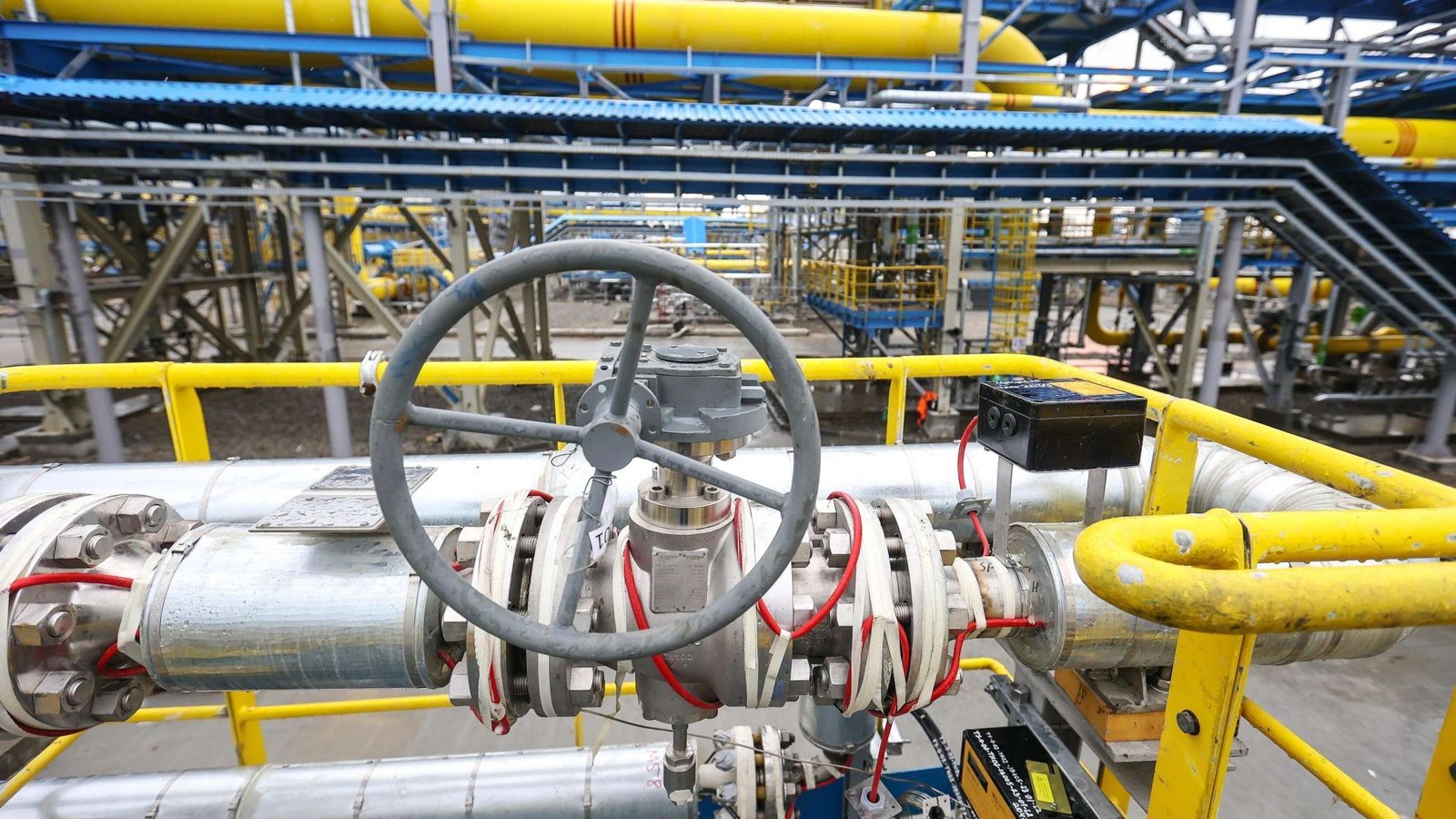
In 2025, natural gas consumption in the five Central Asian countries reached 119.6 billion cubic meters, increasing by 76% over ten years. These figures are presented in the World Energy Review 2026 by Eni, based on data from Kazakhstan, Kyrgyzstan, Tajikistan, Turkmenistan, and Uzbekistan.
Simultaneously, the region's gas exports declined from 89.6 billion cubic meters in 2015 to 47.4 billion in 2025. Total production also decreased—from 153.0 billion to approximately 140.9 billion cubic meters.
Turkmenistan produced the most gas—72.48 billion cubic meters. Uzbekistan produced 40.16 billion, and Kazakhstan produced 28.21 billion cubic meters.
Uzbekistan became the largest consumer, accounting for 54.32 billion cubic meters, or 45% of the regional demand. Turkmenistan followed with 35.58 billion, and Kazakhstan with 28.82 billion cubic meters.
Per capita, Turkmenistan led with 4,671 cubic meters. In Uzbekistan, the figure was 1,466 cubic meters, and in Kazakhstan, 1,382.
Turkmenistan provided the bulk of gas exports, supplying 36.89 billion cubic meters abroad, or about 78% of the regional total. Uzbekistan exported 5.72 billion, and Kazakhstan exported 4.77 billion cubic meters. Kazakhstan's exports decreased by 28% over the year; in 2015, they amounted to 20.11 billion cubic meters.
Gas imports by the region's countries reached approximately 26.1 billion cubic meters. Uzbekistan accounted for 19.88 billion, Kazakhstan for 5.37 billion, Kyrgyzstan for 0.64 billion, and Tajikistan for 0.20 billion cubic meters.
The largest gas reserves are concentrated in Turkmenistan—13,900 billion cubic meters out of the 16,578 billion recorded in the five countries. Kazakhstan's reserves are estimated at 1,830 billion, and Uzbekistan's at 846 billion cubic meters.
Kazakhstan remained the region's largest oil producer. In 2025, its production increased by 11.8% and reached 2,098 thousand barrels per day—about 88% of the total for the five countries. Total production amounted to approximately 2,385 thousand barrels per day, compared to 2,030 thousand in 2015.
Turkmenistan produced 200 thousand barrels per day, Uzbekistan 81 thousand, and Kyrgyzstan 6 thousand. The figures include oil, including unconventional, and gas liquids. Kazakhstan exported 1,243 thousand barrels per day, and Turkmenistan exported 19 thousand.
Of the 31,041 million barrels of regional oil reserves, Kazakhstan accounted for 29,799 million. Oil consumption in Central Asia grew from 602 thousand barrels per day in 2015 to 776 thousand in 2025.
The region saw an increase in solar and wind energy capacities. In 2025, solar plants had a total capacity of about 7,359 MW, up from 4,417 MW the previous year, representing a growth of approximately 67%. Uzbekistan accounted for 5,934 MW, Kazakhstan for 1,325 MW, and the remaining countries for another 100 MW.
The capacity of wind farms in Kazakhstan and Uzbekistan, for which data is available in the review, reached 3,561 MW, up from approximately 2,021 MW the previous year. In Kazakhstan, the figure was 1,909 MW, and in Uzbekistan, 1,652 MW.
In 2025, Kazakhstan's solar plants generated 2,075 GWh, and wind farms generated 5,401 GWh. For Uzbekistan, the review provides data only for 2024: 3,965 GWh from solar and 790 GWh from wind generation.
CO2 emissions in the five countries in 2024 amounted to approximately 473.5 million tons, compared to 363.8 million tons in 2015. Kazakhstan accounted for 243.0 million tons, or about 51% of the regional total, Uzbekistan for 121.8 million, and Turkmenistan for 87.9 million tons. Kyrgyzstan's figure was 11.9 million tons, and Tajikistan's was 8.9 million tons. Over the year, emissions increased by 28.6% in Kyrgyzstan and by 14.2% in Tajikistan. The review does not include data for 2025.
The population of the five countries in 2025 reached 83.6 million, compared to 69.6 million in 2015. Uzbekistan had 37.1 million residents, Kazakhstan 20.8 million, Tajikistan 10.8 million, Turkmenistan 7.6 million, and Kyrgyzstan 7.3 million.
The region's total real GDP was estimated at approximately 506.7 billion dollars in 2015 prices. Kazakhstan accounted for 260.3 billion dollars, and Uzbekistan for 152.4 billion.
Kyrgyzstan showed the highest economic growth rate at 11.1%. It was followed by Tajikistan with 8.4%, Uzbekistan with 7.7%, Kazakhstan with 6.5%, and Turkmenistan with 6.3%.